
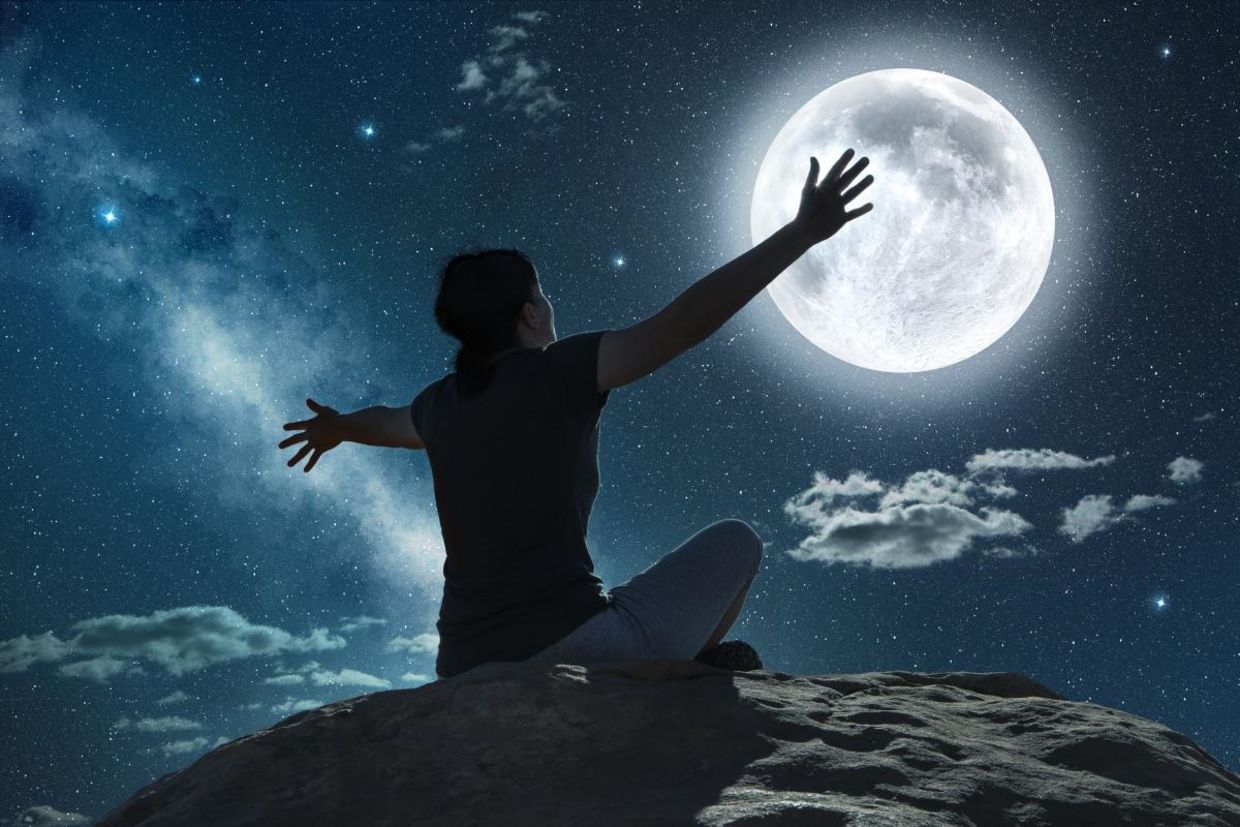
The Power of the Full Moon: Science, Yoga, and the Ancient Wisdom Behind Purnima
Every month, when the moon becomes full and bright, I feel a quiet shift within myself. The nights seem calmer yet more alive, the mind more alert, and meditation naturally goes deeper.
I may not strictly follow every traditional ritual that our culture prescribes for full moon days, but one thing I never miss is meditation. And every time I sit in silence during a full moon, there’s a gentle sense of positivity, clarity, and emotional release that’s hard to explain in words.
Growing up in Nepal and being deeply connected to yoga and holistic living, I’ve always seen how Purnima (Full Moon) holds a special place in Sanatan culture. People fast, chant, perform special pujas, read sacred texts, and spend time in reflection.
But what fascinated me over time is that this reverence for the full moon isn’t limited to our culture alone. Across the world, civilizations have marked full moons as sacred moments for renewal, gratitude, and spiritual connection.
So why is the full moon so important?
Let’s explore it from scientific, yogic, and spiritual perspectives, while honoring the deep wisdom of our ancestors.
🌕 The Scientific Influence of the Full Moon
The Moon and Water in Nature
Science clearly shows how the moon’s gravity controls the ocean tides. During full moons and new moons, tidal movements are strongest.
Our bodies are made up of nearly 60–70% water, so while science hasn’t fully proven how lunar gravity directly affects the human body, many researchers acknowledge subtle shifts in fluids and biological rhythms.
This may explain why many people experience during full moons:
• restlessness
• heightened emotions
• deeper dreams
• increased sensitivity
The Moon and Sleep Patterns
Another interesting observation supported by modern research is that full moon nights are brighter, which can influence melatonin levels and sleep quality.
Even today, people often report:
• lighter sleep
• waking up more often
• feeling mentally active
Long before electricity, moonlight was a major natural light source. Our ancestors likely noticed how behavior and mood changed during these brighter nights.
🧘 The Yogic View: Why Full Moon Is Powerful for the Mind
In yogic science, the moon (Chandra) is directly linked with the mind and emotions.
The sun represents energy and action.
The moon represents calmness, reflection, and consciousness.
On full moon days, yogic traditions believe the mind becomes more active and sensitive. Instead of resisting this, yoga teaches us to use this heightened state wisely.
That’s why full moons are ideal for:
✔ meditation
✔ mantra chanting
✔ fasting or light food
✔ self-reflection
Why Meditation Feels Deeper on Full Moon
From my own experience, meditation during full moons feels naturally more intense yet peaceful. Thoughts rise to the surface faster, and when I stay present, they also dissolve more easily.
It feels like the mind opens up, allowing emotional cleansing and clarity.
Many yogis believe full moon energy helps balance mental fluctuations, making it easier to enter deeper awareness.
Why Fasting Is Practiced
Fasting or eating simple sattvic food on Purnima helps:
• rest the digestive system
• reduce heaviness in the body
• sharpen awareness
When digestion slows, energy flows more toward healing and mental focus. This is why fasting is common in yogic and spiritual traditions.
Why Chanting Mantras Is Emphasized
Sound vibration has always been central in yoga.
On full moon days, when mental energy is high, chanting:
• calms the nervous system
• improves concentration
• brings emotional stability
It becomes a natural tool to center the mind.
Spiritual Meaning of the Full Moon in Sanatan Culture
In Sanatan Dharma, the full moon symbolizes:
- completeness
- Illumination
- spiritual growth
It is seen as a cosmic moment when nature is at its peak energy, making it easier for humans to connect with higher awareness.
Traditionally people observe:
• special pujas
• fasting (vrata)
• charity and food donations
• ancestor remembrance in some regions
These practices weren’t just rituals. They were carefully designed ways to cleanse the body, calm the mind, and strengthen community bonds.
📿 Important Full Moons in Vedic and Nepali Tradition

Here are some of the most spiritually meaningful Purnimas, celebrated across Nepal and India:
Chaitra Purnima
Associated in many regions with Hanuman worship, symbolizing strength, courage, and devotion.
Vaishakh Purnima (Buddha Purnima)
Marks the birth, enlightenment, and passing of Lord Buddha. A powerful day for meditation and compassion.
Jyeshtha Purnima
Observed in some regions as vows for family well-being and stability.
Guru Purnima (Ashadha Purnima)
Dedicated to honoring spiritual teachers and wisdom traditions.
Shrawan Purnima (Janai Purnima / Raksha Bandhan)
A major festival in Nepal symbolizing purification, protection, and renewal of spiritual vows.
Yomari Punhi (Margashirsha Purnima)
A beautiful Newar festival celebrating harvest, gratitude, and community bonding.
Sharad Purnima
Believed to carry healing moonlight energy, traditionally associated with offerings like kheer under moonlight.
Kartik Purnima
One of the most sacred full moons for river baths, lamp offerings, and spiritual purification.
Swastani Purnima (A Special Nepali Tradition)
One of Nepal’s most meaningful full moons is Swastani Purnima, which begins the month-long observance of Shree Swasthani Brata Katha.
This sacred period is dedicated to Goddess Swasthani, worshipped for:
• granting strength and patience
• fulfilling sincere wishes
• bringing peace and good fortune
From Poush full moon to Magh full moon, devotees:
• take ritual baths
• read sacred stories daily
• fast or eat simple food
• practice discipline and devotion
It’s a powerful time of spiritual renewal passed down for generations.
🌍 Full Moon in Other Cultures Around the World
What amazed me most while researching is how almost every civilization has respected the full moon.
Some examples:
• Sri Lanka and Buddhist countries observe every full moon as a sacred religious day (Poya Day)
• China celebrates the Mid-Autumn (Harvest Moon) Festival for reunion and gratitude
• Thailand’s Loy Krathong festival honors water and letting go under the full moon
• Jewish Passover begins on a full moon
• Easter in Christianity is calculated using the first full moon after the spring equinox
• Many indigenous and modern pagan traditions perform full moon ceremonies
Different stories, same moon.
Humanity instinctively recognized the full moon as a time of transformation.
How Ancient Vedic Rishis Understood Cosmic Rhythms
Long before telescopes or modern science, ancient Vedic scholars carefully observed the sky.
They developed:
• detailed lunar calendars (Panchang)
• Nakshatra systems tracking the moon’s movement
• advanced timekeeping methods
• mathematical models for eclipses and planetary motion
Scholars like Aryabhata even explained eclipses scientifically through shadows, not myths.
Texts like Surya Siddhanta laid foundations for astronomical calculations centuries ago.
While modern science may not prove every spiritual belief about “energy,” it absolutely confirms that our ancestors were brilliant observers of the cosmos.
Their rituals were based on natural rhythms, not blind faith.
Why Full Moon Practices Still Matter Today
In today’s fast, digital world, we rarely pause.
Full moon traditions offer a beautiful reminder to:
✔ slow down
✔ reset the mind
✔ cleanse the body
✔ reflect on life
✔ reconnect with nature
Meditation brings clarity
Fasting supports health
Chanting calms emotions
Rituals build gratitude and community
My Personal Experience
Even without strictly following every cultural ritual, I’ve felt the difference full moons bring.
Whenever I meditate during a full moon:
• the mind feels clearer
• emotions release gently
• positivity flows naturally
It’s like nature itself supports inner stillness.
For me, Purnima is not about strict rules. It’s about awareness, balance, and honoring the rhythm of life.
Final Reflection
The full moon is more than a beautiful sight in the sky.
It is:
- a natural energy peak
- a spiritual checkpoint
- a reminder to pause and renew
Our ancestors understood the deep connection between the universe and human life. Their wisdom blended astronomy, wellness, and spirituality into everyday living.
Even today, when science explains parts of it and mystery remains in others, one truth is clear:
Aligning with nature’s cycles brings harmony.
The full moon invites us each month to slow down, breathe deeply, and return to ourselves.

You must be logged in to post a comment.