
Today, I’m excited to invite you on a journey into a festival that’s not only heartwarming but also bursting with flavor – whether you know it as Raksha Bandhan, Janai Purnima, Kwanti Day, or Rakhi Day, it’s a celebration that’s close to our hearts.
As we know on August 30th, 2023, as the world is illuminated by a rare celestial spectacle – a Super Blue Moon – we’re reminded of the cosmic dance that weaves through our lives. This extraordinary event, merging a Supermoon’s proximity to Earth and a Blue Moon’s second appearance in a single month, is more than just a visual marvel. It carries cultural and symbolic weight, beckoning us to ponder the mysteries of the universe.
As we celebrate Raksha Bandhan, Janai Purnima, Kwanti Day, or Rakhi Day – whatever resonates with you – let’s embrace the awe of this Super Blue Moon. It’s a reminder of the intricate connection between our earthly existence and the vast sky above. Take a moment to bask in the wonder, allowing it to inspire introspection and deepen your admiration for the cosmic beauty that surrounds us all.

It’s that special time of the year when we celebrate the unbreakable bond between brothers and sisters. Held during the magical Sawan month, which usually falls in August, this festival has always been close to my heart. But guess what? There’s more to Raksha Bandhan than just the vibrant threads and the sweet treats we all adore. Brace yourselves, because we’re about to uncover a hidden treasure that has been gracing this occasion for ages – the incredible and mighty Kwanti!
Raksha Bandhan: Beyond the Threads and Sweets
In Raksha Bandhan, sisters tie colorful threads called “rakhis” around their brothers’ wrists. It’s a heartfelt gesture that symbolizes their strong bond. “Rakshya” means “to protect,” and “bandhan” translates to “tie” or “bond.” So, Raksha Bandhan is all about the “tie of protection.” The thread itself is called “Doro,” which some folks even refer to as “Janai.”
But here’s something that often gets overshadowed: on this day, everyone – men, women, kids, regardless of status or background – gets tied a sacred colorful thread around their wrist. Males usually tie it around their right wrist, while women tie it around their left wrist. It’s like a subtle reminder of the unity that this festival brings.
The Hidden Star: Kwanti – More than Just a Dish
Now, let’s turn the spotlight to Kwanti. Amid all the festivity, there’s a superfood waiting to be discovered – Kwanti. Imagine a mix of beans and grains, soaked and sprouted, coming together to create a dish that’s not only delicious but also a powerhouse of health benefits.
- Nutrient Packed: Kwanti is like a treasure chest of nutrients – vitamins, minerals, and proteins that our bodies crave.
- Tummy’s Best Friend: It’s like a superhero for our digestion, making sure everything gets along well in our tummy.
- Cleansing Magic: Kwanti gently detoxifies our body, helping us get rid of things we don’t need.
- Strength in Every Bite: Eating Kwanti is like boosting our body’s defense system – it helps make our immune system stronger.
- Steady Energy: Kwanti’s energy is like a steady river that keeps us going throughout the day.
Reviving Tradition Through Kwanti
In a world where fast food often steals the show, our traditional foods sometimes take a back seat. But here’s where we come in! By sharing the story of Kwanti’s goodness, we can bring it back to the forefront.
Nepali and Indian Festival Delights: Ayurveda’s Gift to Health
In Nepali and Indian cultures, every festival comes with a special dish that’s like a gift to our health. These traditions are deeply rooted in Ayurveda, the ancient science of well-being. Each dish is a treasure trove of taste and health, crafted to nourish our bodies and souls.
Embracing Kwanti on Raksha Bandhan
So, this Raksha Bandhan, while you tie rakhis and celebrate togetherness, why not also whip up a pot of Kwanti? As you savor each spoonful, remember that you’re not just enjoying a dish; you’re celebrating a tradition that’s as old as time, packed with love and health.
Spread the word, savor the flavors, and let’s make Raksha Bandhan about threads, sweets, and the superfood that’s been a part of the celebration all along. Happy Raksha Bandhan, and here’s to embracing tradition, unity, and the incredible power of Kwanti!
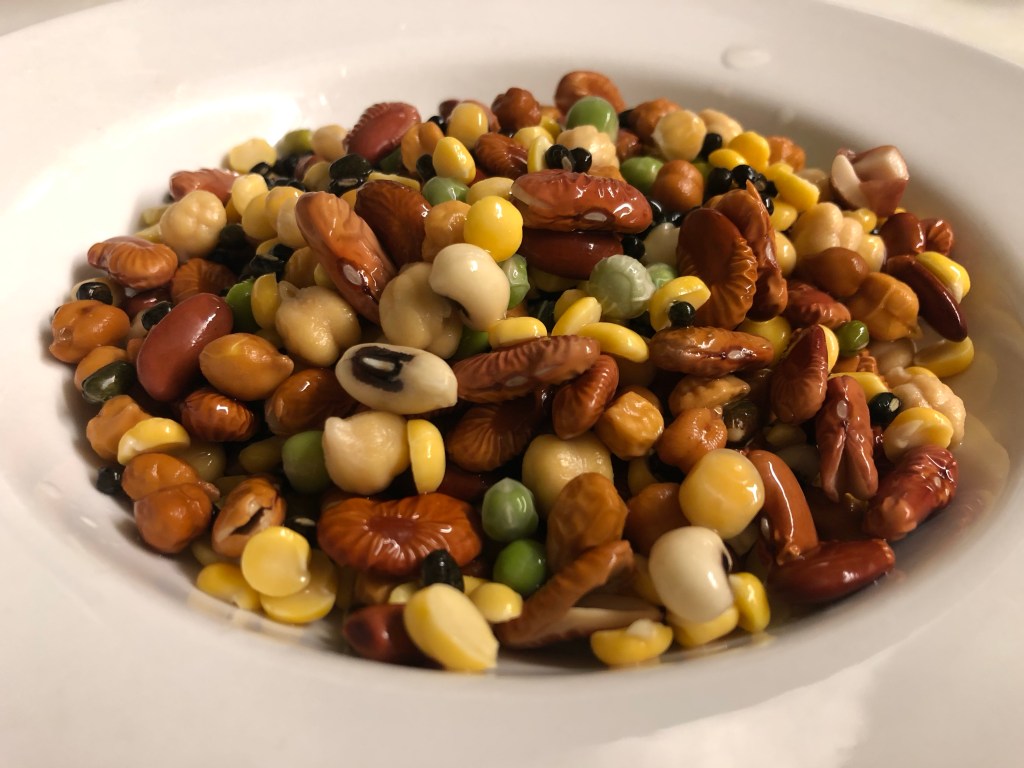
Kwanti Recipe: Bringing Tradition to Your Plate
Now, here’s the exciting part! Let’s dive into the magical process of making Kwanti, connecting you to generations of tradition and health:
Ingredients:
A mixture of nine different legumes and grains (such as black gram, chickpeas, green gram, soybeans, field beans, peas, lentils, wheat, and rice)
Water for soaking
Spices for seasoning (cumin seeds, turmeric, ginger, garlic, etc.)
Salt to taste
Ghee or cooking oil
Instructions: How to Make it?
Begin by thoroughly washing the legumes and grains under running water.
Soak the mixture in water overnight or for about 8-10 hours. This allows them to swell and sprout.
Drain the soaked legumes and grains and let them sit in a colander for a few hours to allow further sprouting.
Once sprouted, heat a pan with ghee or oil and add cumin seeds, turmeric, ginger, and garlic. Sauté for a minute until aromatic.
Add the sprouted legumes and grains to the pan and stir well.
Add water and let it come to a boil. Then, reduce the heat and let it simmer until the legumes and grains are cooked and tender.
Season with salt and any additional spices of your choice.
Serve the Kwanti hot, relishing not only its flavors but also the tradition it carries.
As you savor each spoonful of Kwanti, remember that you’re not just tasting a dish; you’re savoring centuries of tradition, nourishment, and love. Happy Raksha Bandhan, and here’s to embracing the incredible power of Kwanti and the stories it holds!
Similar Recipes are available in my latest book available on Amazon, Click here to view






 Dhruva's Creations
You must be logged in to post a comment.